

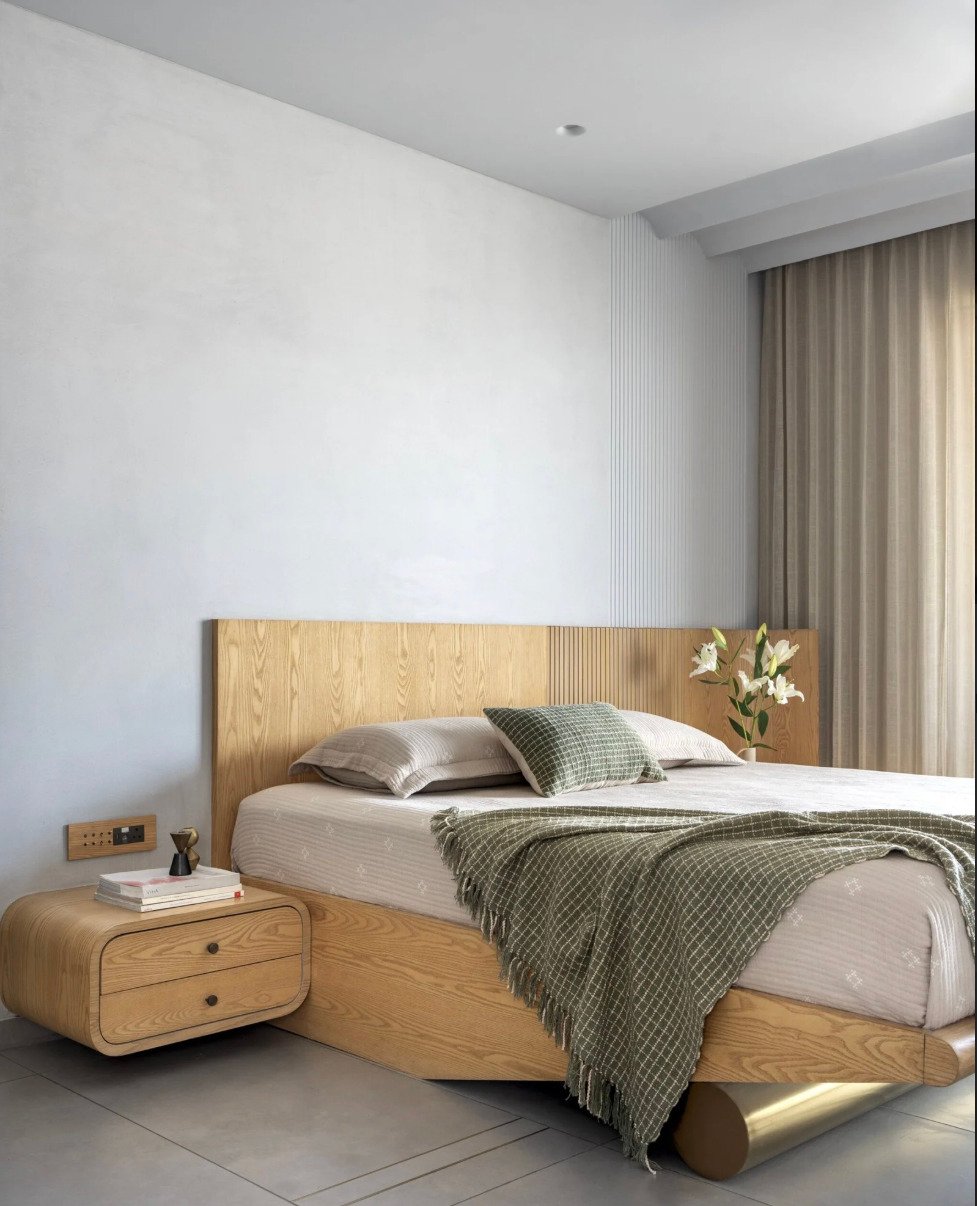
The bedroom is the most personal space in a home. It is not designed to impress guests, it is designed to restore you. At Sparc Design, we believe bedroom décor goes far beyond selecting a bed and soft furnishings. It is about shaping the atmosphere, balancing proportion, and creating a space that supports calm, comfort, and quiet expression. A well-designed bedroom does not shout. It whispers.
Start with the Foundation: Architecture Before Accessories
Before choosing décor elements, the architectural framework must be understood:
- Ceiling heights
- Beam placements
- Window orientation
- Natural light movement
- Circulation within the room
Sometimes structural constraints like beams or columns become opportunities. A concealed beam can transform into a sculpted wall. A niche can evolve into a soft display backdrop. When architecture leads, décor feels effortless.
Choosing the Right Colour Palette
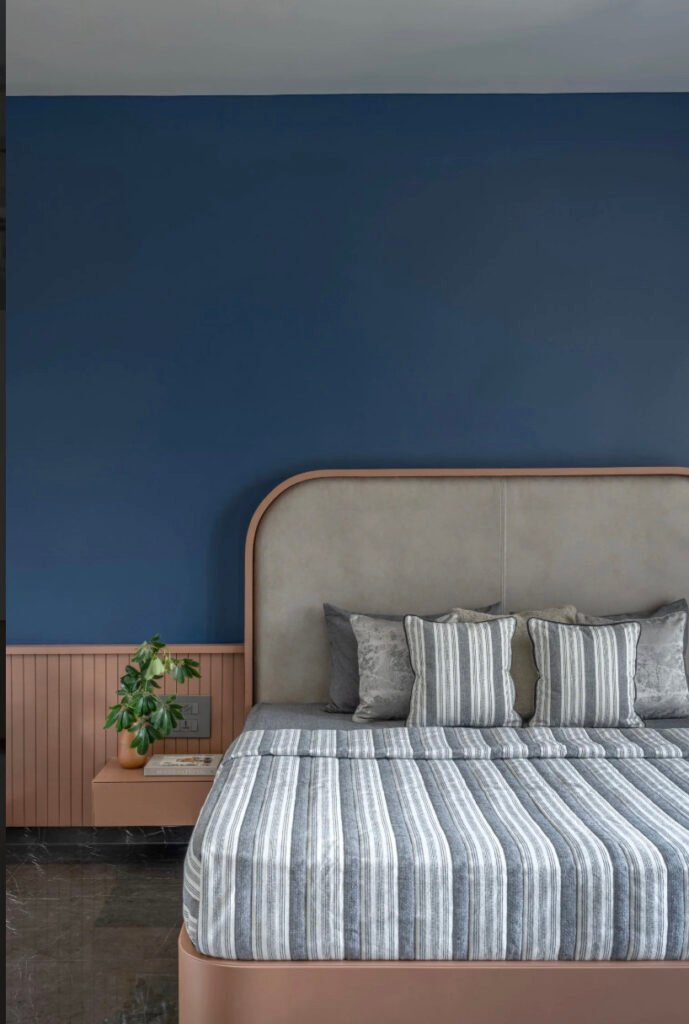
Bedroom décor works best when the palette supports relaxation.
Neutral tones such as:
- Soft greys
- Warm beiges
- Muted browns
- Gentle off-whites
create visual calm. These shades allow texture and light to add depth without overwhelming the senses.
For those who prefer stronger expression, deeper tones can be introduced thoughtfully perhaps in a feature wall, upholstery, or artwork while keeping the overall environment balanced.
The key is cohesion, not contrast for the sake of impact.
The Role of the Bed: Anchor of the Room
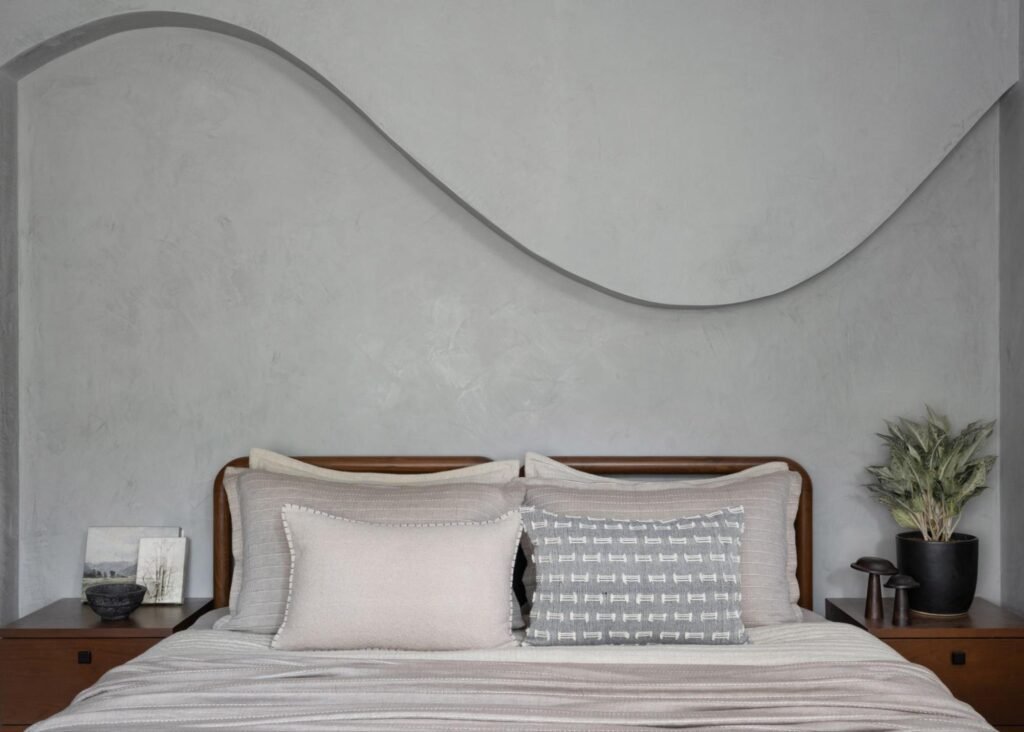
The bed is not just furniture it is the architectural anchor of the bedroom.
A well-designed headboard can:
- Introduce curvature to soften geometry
- Conceal structural beams
- Add texture and material depth
- Create visual grounding
Solid wood, upholstered panels, or textured finishes can define the room’s personality without overcrowding it.
Scale and proportion matter more than ornament.
Layering Through Texture, Not Clutter
Instead of excessive décor objects, layering should happen through materials:
- Soft fabrics
- Matte wall finishes
- Brushed plaster textures
- Warm wooden elements
- Subtle metal accents
Texture creates richness without visual noise. It allows the bedroom to feel layered yet serene.
Less clutter. More intention.
Lighting: Designing for Mood
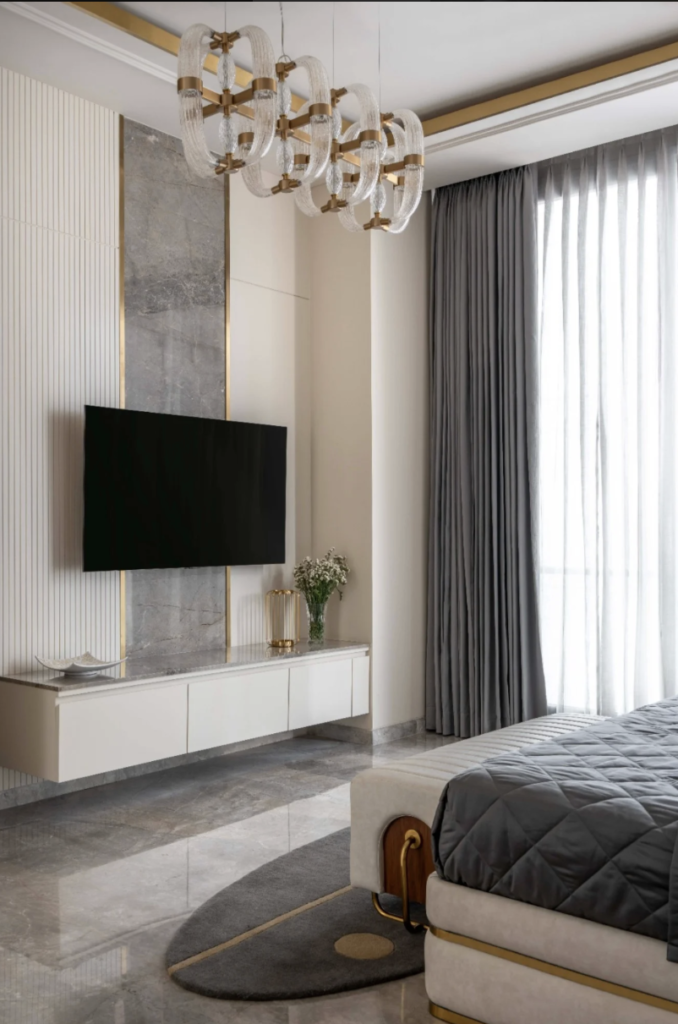
Bedroom lighting should be layered and adjustable.
- Ambient lighting for overall softness
- Bedside lamps for intimacy
- Cove or concealed lighting for depth
- Accent lighting to highlight textures
Lighting should feel warm and indirect, avoiding harsh glare. The goal is to create a gradual transition from day to night not a stark shift.
Light defines how a bedroom feels more than colour ever can.
Storage That Disappears
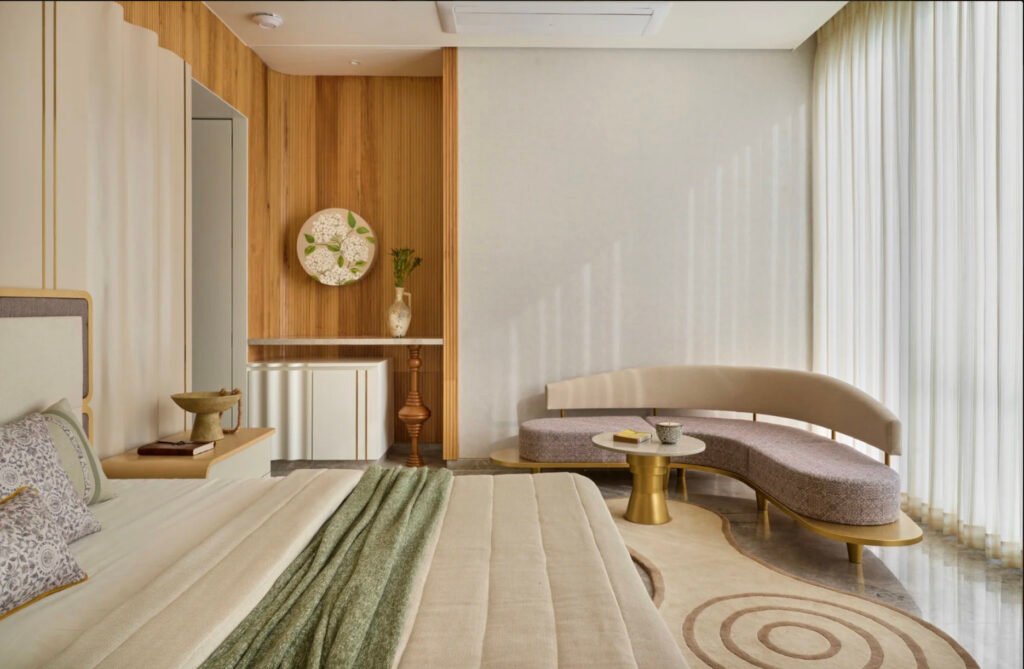
In bedroom décor, storage should feel integrated, not imposed.
Wardrobes, niches, and shelving units should blend into the architectural language of the room. Clean lines, concealed handles, and thoughtful detailing help maintain visual calm.
When storage is seamless, the space feels larger and lighter.
Minimal, Maximal, or Balanced?
Some bedrooms thrive on minimal restraint. Others feel richer with layered textiles and expressive art.
At Sparc Design, we guide clients toward what suits their lifestyle. The bedroom should match your emotional rhythm whether that means sculptural calm or curated warmth.
It is not about trends. It is about how you want to feel when you enter the room at the end of the day.
